| |
| What
is ecology? |
 |
|
|
|
|
|
The ecology has reached enormous importance
in the last years.
The increasing interest of the man
by the environment in which it lives must fundamentally
to the conscience taking on the problems that affect
our planet and demand a quick solution.
The alive beings are in permanent interaction
between each other and with the environment in which
they live. The ecology analyzes how each element of
an ecosystem affects the other components and how this
is affected too. It is a synthesis science, because
to understand the complex plot of relations that exist
in an ecosystem it takes knowledge from botany, zoology,
physiology, genetics and other disciplines like the
physics, chemistry and geology.
In 1869, the german biologist Ernst
Haeckel coined the term ecology, refering to the Greek
origin of the word (oikos, house; logo, science, study,
treaty). According to Haeckel, ecology had study species
in its biological relations with environment. Other
scientists took care later of the surroundings in which
each species lives and of its symbiotic and antagonistic
relations with others.
Towards 1925, August Thienemann, Charles
Elton and others stimulated the ecology of the communities.
They worked with concepts as the one of food web, or
the one of pyramid of species, in which the number of
individuals diminishes progressively from the base to
the peak, the plants to the herbívorous animals
and the carnivores.
 |
The lack of green
spaces, the overpopulation, excess smoke and the
heat generated by different machines, add to acoustic
and visual contamination makes the city an adverse
atmosphere for the man. |
 |
|
|
New name for an old problem
Neither the problems that ecology treats are new nor the
ecology is only one fleeting fashion.
Already in the Neolithic period, ten thousand years back,
the men destroyed forests to obtain wood and also to open
clear where to sow the grains on which they fed themselves.
Thus they were altered the ecosystems in which those communities
lived.
In Greece, Platon left written testimony of the mountain
deforestation of the Ática, that had stayed as "the
skeleton of a body make thin by the disease". The water,
observed the philosopher, "was not lost then as it happens
today, running on the naked land".
Of course, the problem did not affect only the Antiquity:
throughout history diverse terrestrial areas were modified
by the action of the man. For example, as of the decade of
the '50 agriculture experienced a growth favoured by the advances
in genetic engineering of seeds. This intensification of the
use of ground caused the degradation of same and the necessity
to operate new areas.
|
 |
When the human
activity lacks controls and regulations, great catastrophes
can take place. The petroleum spills cause the death of
numerous organisms, altering the ecological balance. |
|
 |
When disappearing the forests
not only the capacity of renovation of oxygen in the atmosphere
is lost, but that also the fertility of the ground is
reduced and its erosion is increased. |
|
|
Vision of set
The Earth confronts serious danger of contamination and death
of vegetal species and animals, and also of grounds, the atmosphere,
the rivers and the seas, that sustain life
Aware of the gravity of the situation, the countries member
of the United Nations met in 1992, in the Conference on "Environment
and Development", known as the Summit of Rio de Janeiro.
, Governors, scientists and journalists there worldwide, informed
and alerted on the problems of the industrial and technological
development.
The knowledge of the nature and the cares that it requires
would be fundamental subjects in the present educative processes.
The educative system, indeed, must provide information on
ecology at all the levels: from the care of a domestic animal,
passing through daily chat with teachers or the work in scholastic
orchards in all levels, since primary to the tertiary specializations
and the awareness of the professionals of other areas in institutes
and universities.
|
 |
The great amount of garbage
that the man generates, burns itself or usually is used
in sanitary fillings to attenuate the impact that this
produce, the developed countries foments the recycled
one. |
|
| |
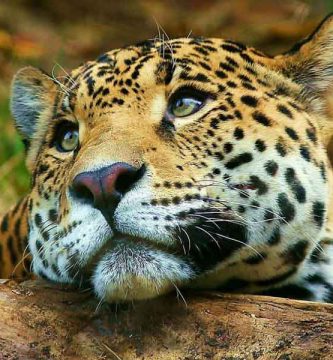
| The lack of care on the
part of the man towards other alive beings puts in danger
of extinction to many species, the bulging bear, some
batrachians, the seals of the Arctic or the whales of
the seas of the south are some of them. |
|
|
|
|
|
|
|